
BENNY CRUZ
Street art.
Reimagining the New York Subway Map
In n a city where nearly every destination can be found with a quick tap on a phone, the physical subway map has quietly become a relic of another era.
For decades, the folded MTA map was a companion to New Yorkers and visitors alike, a small piece of paper that helped millions navigate an unfamiliar city. It represented discovery, independence, and the excitement of finding your way through New York’s endless neighborhoods. Today, most journeys begin and end on a screen. Directions are delivered instantly, routes adjust in real time, and the physical map has largely disappeared from everyday life.
For artist Benny Cruz, that forgotten object became an opportunity.
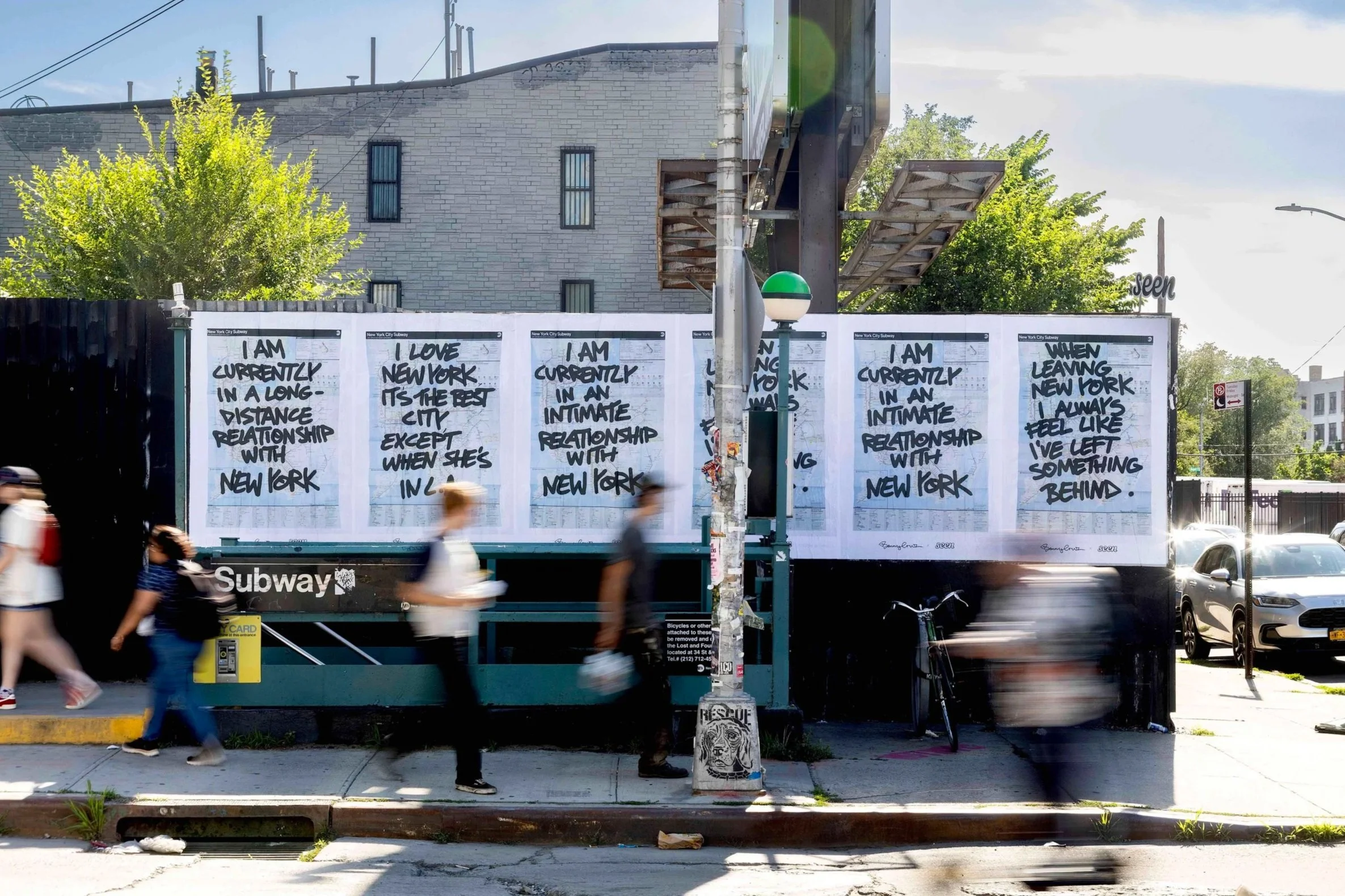
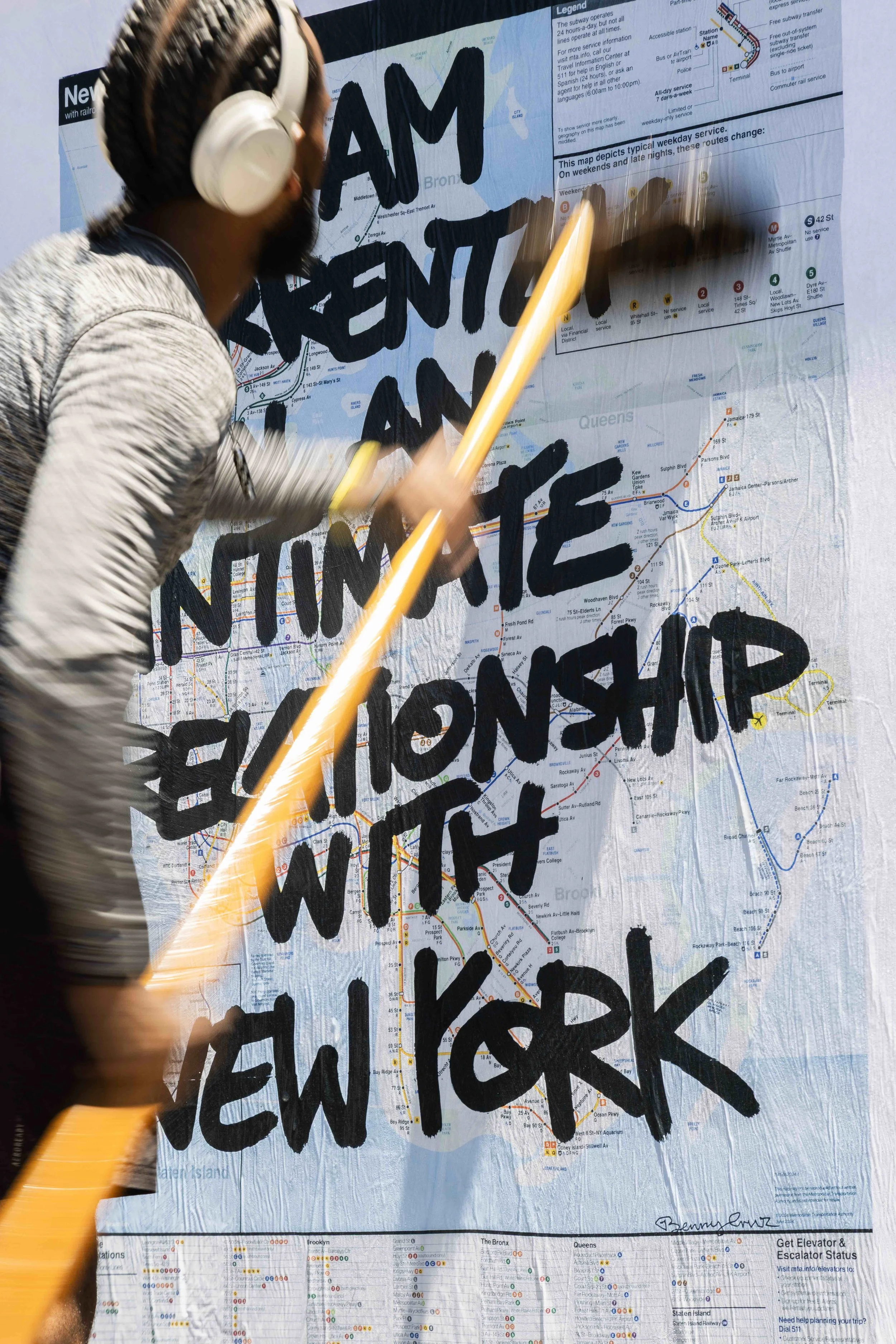
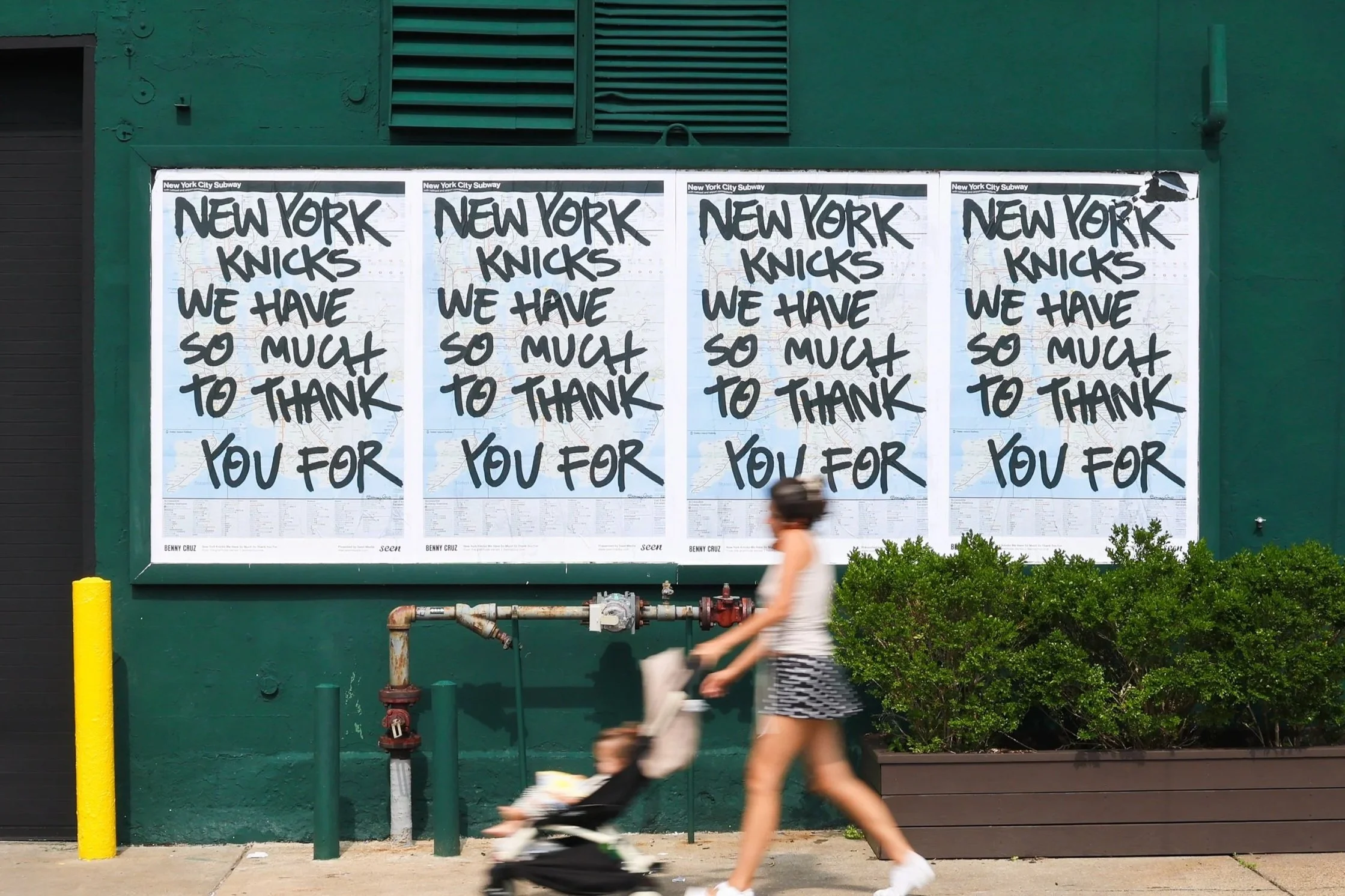
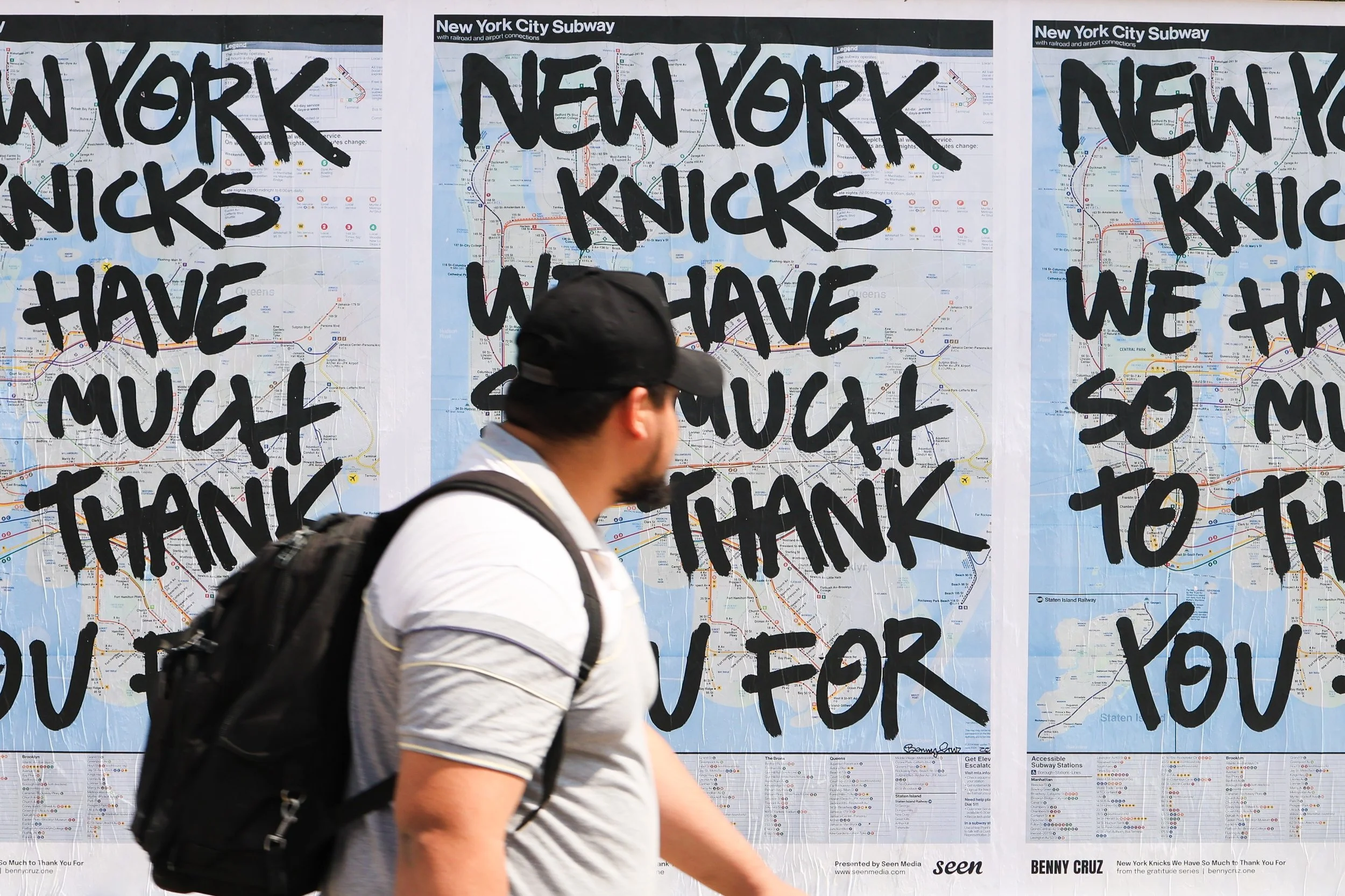
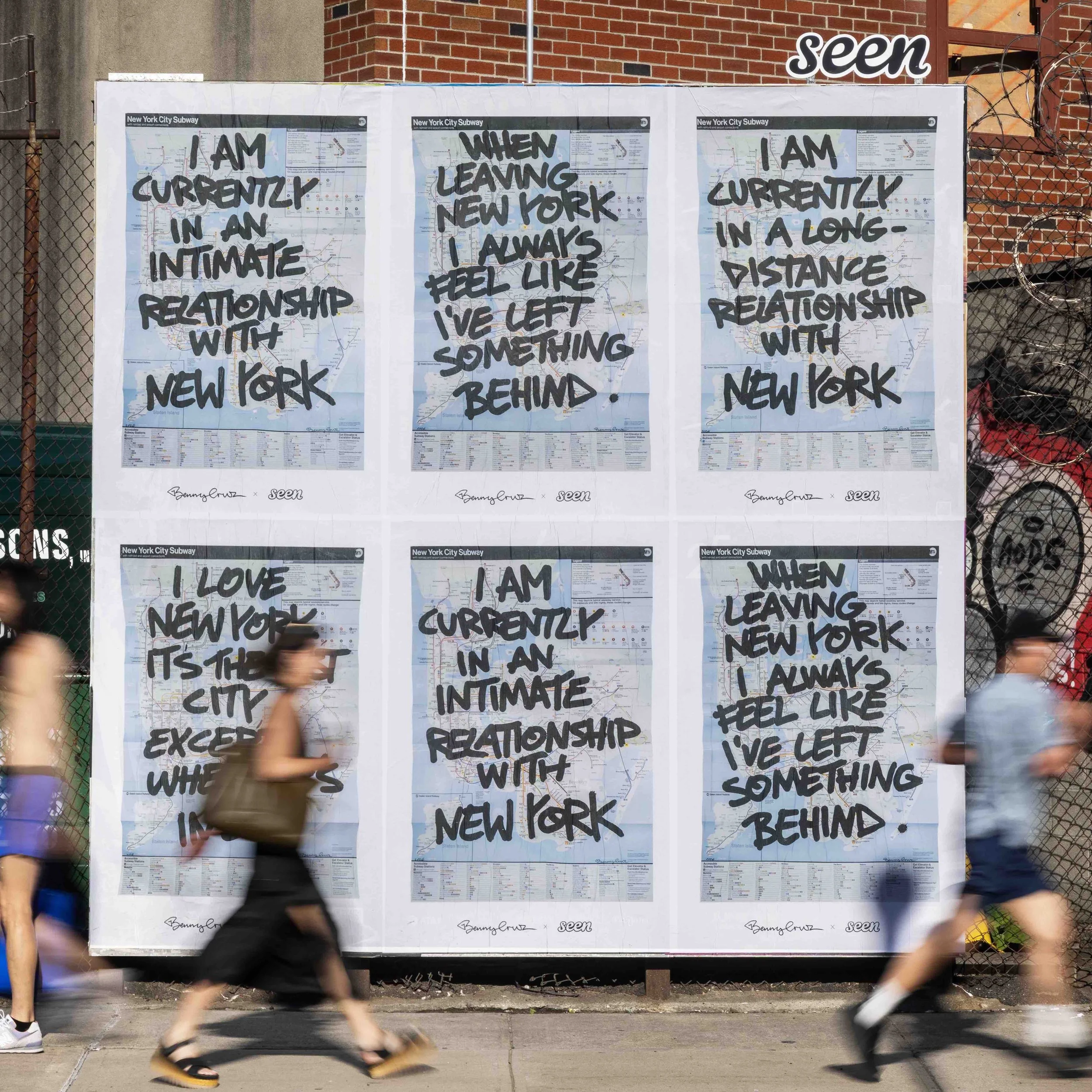
By painting directly onto authentic New York City subway maps, Cruz transforms something designed purely for navigation into something deeply personal. The lines that once guided commuters from one station to another become the foundation for stories about ambition, gratitude, resilience, and the experiences that shape life in New York.
His Subway Series does not erase the purpose of the map, it builds upon it. The familiar network of stations and routes remains visible beneath layers of expressive typography, creating a dialogue between the practical and the emotional. A map designed to show people where they are going becomes a reflection of where they have been.
There is a unique relationship between New Yorkers and the subway system. It is one of the few places where every version of the city exists simultaneously: artists, executives, students, tourists, lifelong residents, and newcomers all sharing the same platforms and trains. The subway map becomes a symbol of those intersecting journeys, a visual representation of movement, connection, and possibility.
For Cruz, the map is not simply an object. It is a record of experience.
In an increasingly digital world, where physical maps have been replaced by GPS directions and smartphone screens, his work brings renewed meaning to something many people no longer interact with. The subway map becomes less about finding a destination and more about remembering the moments, places, and people encountered along the way.
There is a unique relationship between New Yorkers and the subway system. It is one of the few places where every version of the city exists simultaneously: artists, executives, students, tourists, lifelong residents, and newcomers all sharing the same platforms and trains. The subway map becomes a symbol of those intersecting journeys, a visual representation of movement, connection, and possibility.
For Cruz, the map is not simply an object. It is a record of experience.
In an increasingly digital world, where physical maps have been replaced by GPS directions and smartphone screens, his work brings renewed meaning to something many people no longer interact with. The subway map becomes less about finding a destination and more about remembering the moments, places, and people encountered along the way.
Recognizing the connection between Cruz’s work and the city around him, SEEN partnered with the artist to bring the Subway Series into the public realm through a large-scale outdoor exhibition across Brooklyn. Rather than placing the work inside a traditional gallery setting, the collaboration transformed existing urban spaces into a canvas for discovery, allowing New Yorkers to experience Cruz’s work in the same streets and neighborhoods that inspired it.
For SEEN, the project represented an opportunity to use the city’s existing visual landscape as a platform for artistic expression. By dedicating its outdoor spaces to Cruz’s work, the exhibition blurred the line between public art and everyday life, creating moments of connection in places people naturally move through. The exhibition invited people to encounter the artwork unexpectedly, during a walk, on the way to work, or while moving through familiar streets. Much like the subway maps themselves once did, the installations became markers of place and discovery. Public art has always possessed a unique ability to reach audiences beyond traditional cultural spaces. It removes the expectation that someone must actively seek out art and instead allows art to intersect with ordinary life.
A morning commute becomes an encounter with contemporary work. A neighborhood block becomes a place of discovery. A familiar route becomes something unexpected. At a time when so much of how we experience the world has become digital, Cruz’s work serves as a reminder of the power of physical objects and shared experiences. A subway map is no longer simply a tool for finding a destination, it becomes a record of memories, emotions, and connections.
SEEN: Can you share a bit about your journey as an artist and how your practice evolved into working in public spaces?
BENNY: I’ve always been an artist, truly. I live in Europe and when I started to get love from mostly New York and NewYorkers by heart I started what I call the gratitude series and that almost broke the internet which is why you’ve seen both my art and me in New York for some years now. I am just getting started as an artist in New York. I used to tag when I was a kid, I wrote Benny all over my school and I was the only Benny so I got caught. Other than that I used to paint figurative, so I’ve painted plenty of murals too so public space has always been an arena, but I’ve never painted grafitti. Today public space is as obvious as my studio, any place, space, surface or vehicle is a potential backdrop, that’s also why I call myself an interdisciplinary artist because I don’t like limitations within my artistry.
SEEN: What first drew you to text as your primary visual language?
BENNY: I had what I call a meltdown about 10+ years ago for a couple of years due to not going anywhere with my art. I had heard from other artists on different occasions that they didn’t care about the art world because they paint for their own sake. Now that was my reality too, I didn’t care anymore about making it or satisfying people with what I did, instead I went back to my roots which is writing stuff, only now I had something to say and what’s funny is that was my salvation because when I shared those texts on the internet (IG) New Yorkers started to show love and I say til this day that New York saved me, she really did save me.I started to believe in my career and my artistry, as I had finally found myself and my expression.
SEEN: When you begin a new piece, do the words come first, or does the context or surface come first?
BENNY: Oftentimes when I see a surface if it’s let’s say in public space then I know when I see it, but my work takes place in my thoughts, you can’t see I’m working because I’m always working and when I know what I want to express I also know on what surface. Work for me is to live, to listen to music, to ‘listen’ to my emotions and let myself deep dive in to the most beautiful moments as much as the most horrible and sometimes they are the same, life can be that way and sometimes all good things last a New York minute.
SEEN: How do you decide when a phrase is finished or ready to be released into the public?
BENNY: I feel when it’s ready (for me) English is my third language so sometimes I need to edit it, I must say New Yorkers are the most forgiving though because they understand what I mean regardless and I love that about New York
SEEN: How do you think about the "audience" when your work exists in uncontrolled public environments like streets or posters?
BENNY: I am always curious about that, I want to know but it’s like Instagram, it’s out there for people to love, dislike but also to not care about it. My intention is good and my expression is authentically grounded in my emotions.
SEEN: What do you hope someone walking by your work for just a few seconds takes away from it?
BENNY: That would be connection, it’s what I think people feel, some say that I put in to words what otherwise feels like something very complex as I simplify it in order to understand what I feel. It’s still new to me to express my emotions verbally so using art to channel it has been and is very helpful still.
SEEN: Your work often exists in layered urban environments. How do you think about visibility versus noise in that context?
BENNY: Coming from Europe I have other eyes when in NY and I can make an impact in New York silently and gently because what people need is to slow down, pause, reflect and connect. I have great confidence in my expression and visions as it’s proved to have the effect I want it to have, almost always positive. It’s important in a city like New York to recharge and my art is an invitation to take a moment and think about you, your surroundings and be present.
SEEN: Do specific neighborhoods or surfaces in New York change how you approach a piece?
BENNY: Yes, Brooklyn is my first love, she got my heart so that’s my approach to that place, I love New York and every borough, I just love Brooklyn more and I’m sure that’s comes through when I make my art there as I regularly do my art donations to the borough on walls.
SEEN:What does "public art" mean to you, especially compared to gallery-based work?
BENNY: Art for that specific place because for everyone to understand and therefore also for everyone to embrace.
SEEN: What interested you in working with SEEN's Public Arts Initiative, and what do you hope this collaboration contributes to your practice?
BENNY: It was unreal to get such a proposal, I was surprised and so thankful to have this possibility! I love having my art spread all over Brooklyn, the borough I Love the most! I hope people take lots of pictures and I hope for more connections, possibilities and collaborations. I have always wanted to do something with the MTA for example. I hope most of all that everyone who saw my art appreciated it and that they took a moment to pause, reflect and connect